


“You don’t look smart.” I received that feedback early in my career, not on my work, but on my mere existence.
I’d started in finance as a confident, excitable young professional in compliance. Like a kid walking into a toy store for the first time, whenever I was given a task, I would proactively ask questions, raise issues, and offer suggestions in excitement. But my eager personality didn’t align with the environment at the time. So the feedback kept coming:
“You’re too rebellious and adversarial,” on giving suggestions.
“I don’t think a career in compliance is for you,” on questioning the status quo.

The feedback stung, and honestly, it shattered my confidence. I’d like to believe I was introspective and appreciative of feedback, but deep down, I knew it didn’t match my performance. It had nothing to do with anything constructive. Bruised by the comments, I worked so hard to prove them wrong that I overworked myself. I became successful. But my health started to pay the heavy interest on every hour I borrowed from it.
Here’s the full story of how corporate burnout led me to helping other professionals in finance and fintech.
The Entangling Webs of Train Rails and Money Laundering Trails
6:00am. I’d wake to a stack of phone alarms set minutes apart, just to make sure I got up. Groggy and lethargic, I’d put on my ironed shirt and bright tie and walk 2km to the train station, wired earphones in, playing music to lift my spirit before I faced the day. If I was lucky, the train came on time and I reached the office an hour later, sweat all over me. I’d clock in and start fighting financial crime.
As a money laundering investigator, an AML/CFT investigator, to be precise, I truly loved the job. From drug trafficking operations to corruption scandals, I learned firsthand how launderers operate and the creative ways they get away with it. I investigated terrorism-linked cases that opened my eyes to how those organisations move money. As an investigator in the financial sector, I was one of the first in line to face emerging threats, before cases reached the enforcement agencies, and, if successful, the public and the news. Some were sophisticated webs of transactions across multiple companies. Some were mundane and straightforward.
Serious about the field, I pursued professional certifications and earned distinctions along the way. Yet instead of congratulations, some would say “you’re so lucky” or “your boss must really know his stuff,” dismissing the work entirely. I was serious about the craft, and being judged on optics over competence started to agitate me.
As interesting as the job was, it could get dark. Knowing how much money is laundered, how many innocent people lose their savings to scams, and how children are exploited for child sexual abuse material (CSAM) takes a toll. You handle these cases professionally and objectively, but as a human, it’s impossible not to be affected.
Most days, if I was lucky, I left the office by 7:00pm. I unwound at the gym, took the late trains, and got home between 10 and 11, exhausted. By 11:30pm, I’d numb myself doomscrolling to sleep.
I repeated this routine for six years.
Corporate Dopamine and the Crash-Out
After six years in anti-financial crime, my career took its biggest jump, and my health took its biggest dip.
In 2020, at the height of the pandemic, the concept of time blurred for everyone. But one thing was clear: global lockdowns accelerated digital payments at unprecedented speed. Fintech was eclipsing traditional finance, and businesses scaled fast to meet demand.
That’s when I landed a Head of Compliance role at one of the biggest fintech companies in Asia Pacific, over 10 million users at the time. I was asked to build Risk and Compliance from the ground up, starting as a one-man show and growing it into a full team. For the first time, I could show what I could truly do. So I gave it everything. And I didn’t stop.
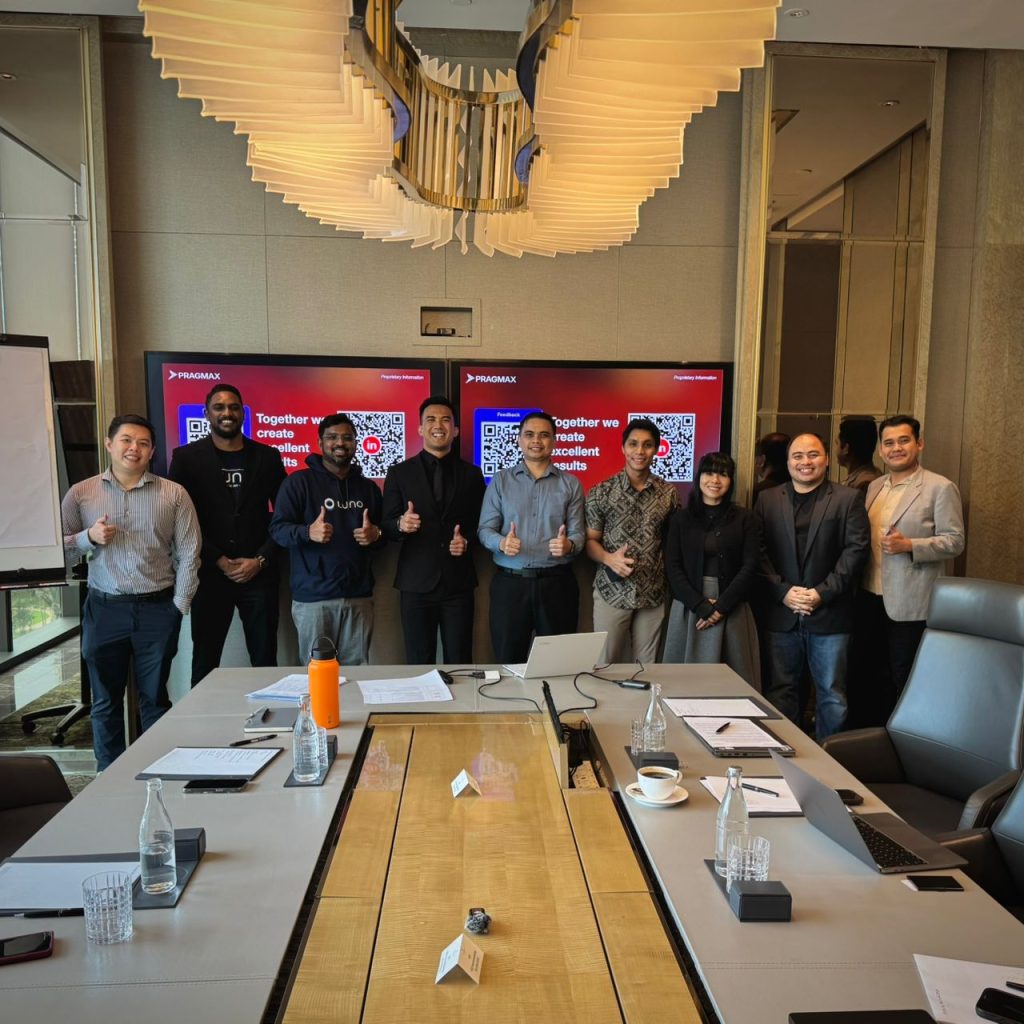
Soon after, I became Head of Compliance for the biggest digital asset exchange in Malaysia, an industry then fighting the perception that “crypto is a scam.” Rather than go it alone, I founded an industry compliance network, DCONG, that worked directly with regulators and was later cited in the FATF Mutual Evaluation Report. Within two years, Malaysia’s digital asset compliance earned a “substantial” rating, on par with the banking sector. I was proud of it. And it was quietly costing me.
But my health kept charging interest on every hour I borrowed. Deep down, I was still hurt by the people who’d undermined me, so on top of running on caffeine, I was driven by an unhealthy obsession to prove I was worthy of something. I drowned in workaholism. I let myself work until 3 or 4am, worked most weekends, and abandoned every other part of my life. I had anxiety attacks. I was losing my hair. I didn’t even look like myself in the mirror. I was a corporate zombie, injecting work dopamine to avoid the reality that I was abandoning my health. I hated what I’d done to myself.
In 2024, I quit, without a job, to save myself from myself.
For the first few weeks, the silence felt strange. No alarms, no dashboards, no crisis to firefight. But slowly, I started to feel like myself again. My hair stopped falling out, the anxiety eased, and I remembered what it was like to have a life outside of work. That recovery is what gave me the clarity for everything that came next.
Moving Fast Without Breaking People
I don’t want anyone else to go through what I went through. But fintech has business demands to meet, regulatory accountability to uphold, and fast-evolving risks to manage. So I started Pragmax Consulting, a compliance consulting firm built by a practitioner, for practitioners.

Being a practitioner means understanding that different businesses face different risks and need different solutions. What works in traditional finance may not work in fintech. In fact, what works in one fintech company may not work in another within the same industry. Every innovation brings its own kind of risk. Practitioner-driven solutions solve compliance problems in a more targeted, efficient way. And it works: within a year and a half, the approach found traction with global and local institutions, from a Fortune 500 asset manager in New York to LTAT, Setel, and Fiuu, with compliance leaders from American Express, ByteDance, and PNB attending Pragmax’s training.
Starting from scratch as a B2B solopreneur isn’t easy. On top of client deliverables, I run my own admin, finance, operations, marketing, and social media, while sharpening my skills. And as a solopreneur, my physical and mental health are the business’s critical assets. My corporate burnout taught me that rest is what makes high-quality work possible. My mind is the operating system of the business.
The most practical habit I’ve built is being disciplined about sleep. I used to sleep 3 to 5 hours a day helping one organisation. Now, with 7 hours of better-quality sleep, I can help more organisations, more business owners, more practitioners. The goal is the same: help others solve complex problems, so they can get more sleep too.
With the rest I needed after burnout, I’ve let go of the insecure need to prove people wrong. I can finally look back at that first piece of feedback, “compliance is not a career for you,” and agree with it.
Compliance is not a career for me.
Modern compliance is.